Loop Current Source Simulator

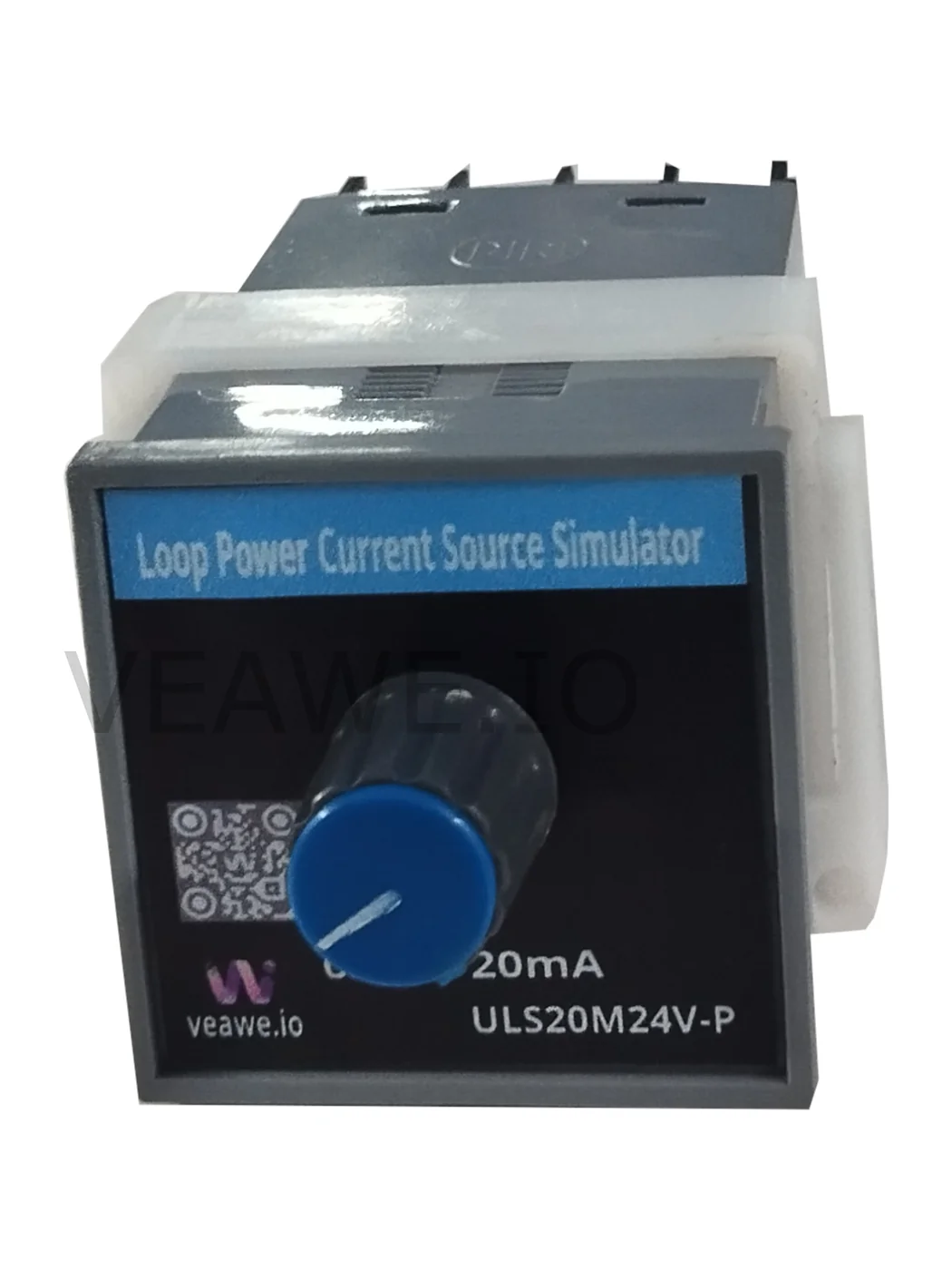
The ULS20M24V-P is a precision 2-wire series 4–20mA current loop simulator designed to assist maintenance engineers, technicians, and system integrators in analog input testing, commissioning, and troubleshooting. By accurately simulating a 2-wire loop-powered transmitter, it allows users to verify PLC analog inputs, DCS channels, SCADA indicators, and chart recorders without requiring actual field instrumentation or external transmitters.
Key Features
- True 2-wire series loop simulator for 4–20mA transmitter circuits
- 5-turn precision wirewound potentiometer for smooth analog control
- Fine adjustment resolution of 0.01 mA across 3.5 mA to 20.5 mA
- Wide DC loop compliance voltage range from 5V to 30V DC (24V nominal)
- Reverse polarity and loop current limiting protection
- Compact panel mount housing with retaining clips (45 mm × 45 mm cutout)
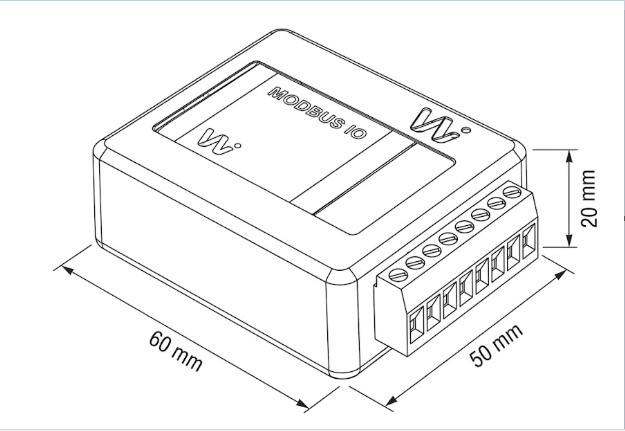
- Dimensions: 48 mm × 48 mm × 90 mm
Ordering Information
| Product Code | Description |
|---|---|
| ULS20M24V-P | Loop Powered Current Source Simulator (2-Wire, 4-20mA, Panel Mount) |
| USS20M24V-D | Current Source Simulator 0/4 to 20mA (with 4-Digit Display, 24V DC) |
| USS20M24V-P | Current Source Simulator 0/4 to 20mA (Without Display, 24V DC) |
| USS20M24V-2P | Dual Output Current Source Simulator (DIN Rail Mountable, 24V DC) |
| USS10V24V-D | Voltage Source Simulator 0-10V (with 4-Digit Display, 24V DC) |
| SPD-20MA | 4-20mA Surge Protection Device |
Applications
- PLC & DCS Analog Input Calibration: Simulating 4–20mA process variables to calibrate analog input cards, SCADA scales, and alarm thresholds.
- Transmitter Loop Testing: Bench testing and verifying field wiring loops, barrier isolators, and analog indicators before plant startup.
- Process Troubleshooting: Isolating faulty 2-wire transmitters by substituting the simulator directly into the signal loop.
- Control Panel Commissioning: Injecting controllable 4–20mA currents to test PID control loops, VFD speed references, and actuator positioners.
Specifications
| Parameter | Value |
|---|---|
| Mounting Type | Panel Mounting (retaining side brackets) |
| Dimensions | 48 mm x 48 mm x 90 mm (W x H x D) |
| Preferred Panel Cutout | 45 mm x 45 mm |
| Weight | Approximately 150 g |
| Enclosure Material | Industrial Grade ABS |
| Operating Temperature | -10 °C to +60 °C |
| Storage Temperature | -40 °C to +85 °C |
| Relative Humidity | 5% to 95% RH (non-condensing) |
Electrical Specifications
| Parameter | Specification |
|---|---|
| Topology | 2-wire Series Current Loop Simulator |
| Supply Voltage (Nominal) | 24V DC External Loop Supply |
| Supply Voltage Range | 5V DC (min) to 30V DC (max) |
| Output Current Range | 4.00 mA to 20.00 mA |
| Current Span Limits | 3.5 mA (minimum) to 20.5 mA (maximum) |
| Output Accuracy | \(\pm 1\%\) of Full Scale |
| Adjustment Mechanism | 5-turn wirewound precision potentiometer |
| Adjustment Resolution | \(\ge 0.01\text{ mA}\) step resolution |
| Loop Load Resistance Range | \(10\,\Omega \text{ to } 500\,\Omega\) |
| Reverse Polarity Protection | Integrated diode clamping on input terminals |
| Short Circuit Protection | Continuous current limiting |
Mechanical Dimensions
Terminal Details & Wiring
Terminal Connections
The ULS20M24V-P operates as a 2-wire passive loop simulator connected in series with an external DC power source and the receiving instrument.
| Terminal Pin | Label | Function | Connection Details |
|---|---|---|---|
| 1 | V+ | Loop Power Input (+) | Connects to external +24V DC loop power supply |
| 2 | V- | Loop Output (-) | Connects to PLC / DCS Analog Input (+) terminal |
| 3 | NC | No Connection | Reserved / Leave open |
| 4 | NC | No Connection | Reserved / Leave open |
[!NOTE] The loop circuit is completed by returning the PLC / receiving device’s Analog Input (-) terminal back to the power supply 0V / GND, creating a standard 2-wire closed current loop.
Revision History
| Revision | Date | Description of Change |
|---|---|---|
| Rev 1.0 | 2026-09-09 | Initial datasheet release |
Get the latest version of this datasheet : click here..
Support
Website: www.veawe.io
Email: info@veawe.io